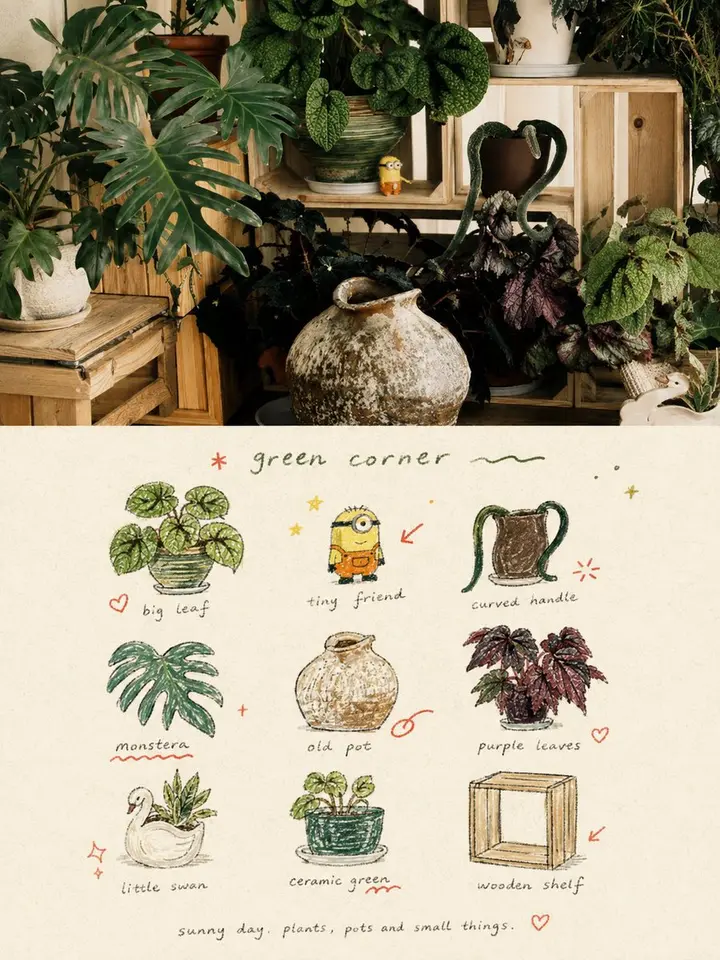
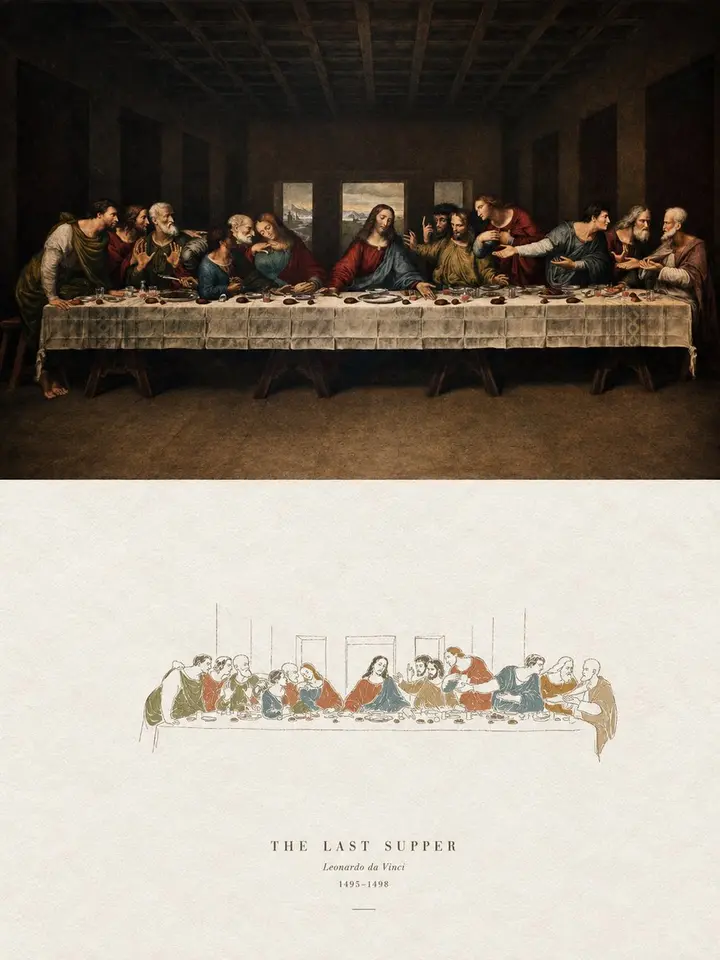
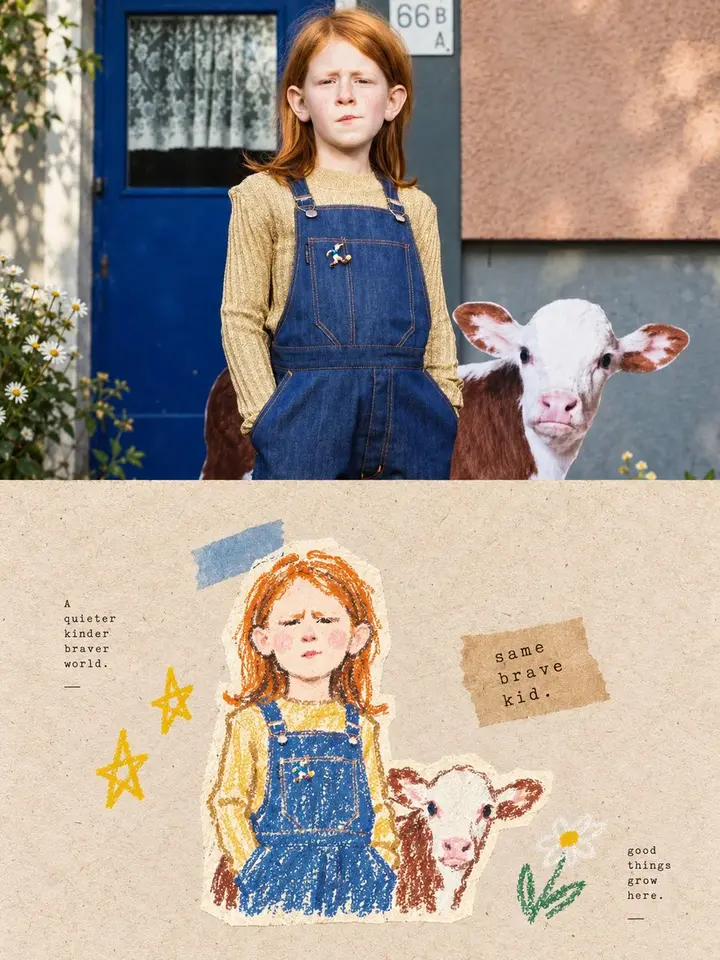
Turn each uploaded photo into its own premium design poster; no collages, one output per photo. 3:4 vertical layout, top and bottom halves of exactly equal height (50% each). Top half: keep the original photo, preserving identity, structure, pose, real texture, natural light and color mood, with only a light, refined grade for an art-magazine feel. Extend the surroundings to fit the frame without stretching, distorting or altering the subject. Bottom half: extract the most recognizable **subject, details, action cues, objects and narrative relationships** and rebuild them as **a 3×3 modular icon grid + naive hand-drawn doodles + crayon/colored-pencil grain + handwritten text**. Don't trace the photo or make a realistic illustration; compress it into 9 visual units most worth remembering: the subject, a feature, carried items, plants, food, transport, a pose, an emotion symbol or a small memorable detail, all clearly from the same photo, like its "memory list". Use a **hidden, loose 3×3 grid**: icons may shift slightly in position, size and angle, ordered but not mechanical. A short handwritten title at the top with small wavy lines, stars or symbols; a tiny handwritten caption at the bottom, like a journal page or collection sheet. Plenty of white space; relaxed, cute, restrained, not messy. Style: **naive hand-drawn doodle illustration** with simple forms, wobbly, uneven, not fully closed outlines, deliberate imperfection. Don't fill colors fully; let paper grain and rough edges show. Black fine outlines, pencil/crayon fills and a few flat spot colors, no realistic shading. Any grid lines are very faint, like light pencil. Palette: **muted retro candy colors** on warm off-white textured paper — sage, mint, crayon blue, cobalt, butter yellow, dusty pink, strawberry pink, coral orange-red; mostly blue-green, yellow and pink fills, orange-red only as rare accents. Add a few **hand-drawn red annotations** (circles, arrows, hearts, sparkles, small crosses, wavy lines), few and precise. Text: a few meaningful words from the photo's theme, mood, place or action, in small, loose handwriting with natural pauses and drifting spacing. The mood is naive, relaxed, vintage, healing and friendly, with editorial design sense. Avoid tidy vector, realistic lighting, heavy shadows, rigid UI icons, templates and childish cartoons.